
Mystery Solved! – A Rare Stained Glass Discovered Inside a 127 Year Old Wildwood Crest Mansion
During a recent tour of one of Wildwood Crest’s oldest homes, we expected to see original woodwork, period architecture, and the kind of Victorian charm that still survives in pockets of the island.
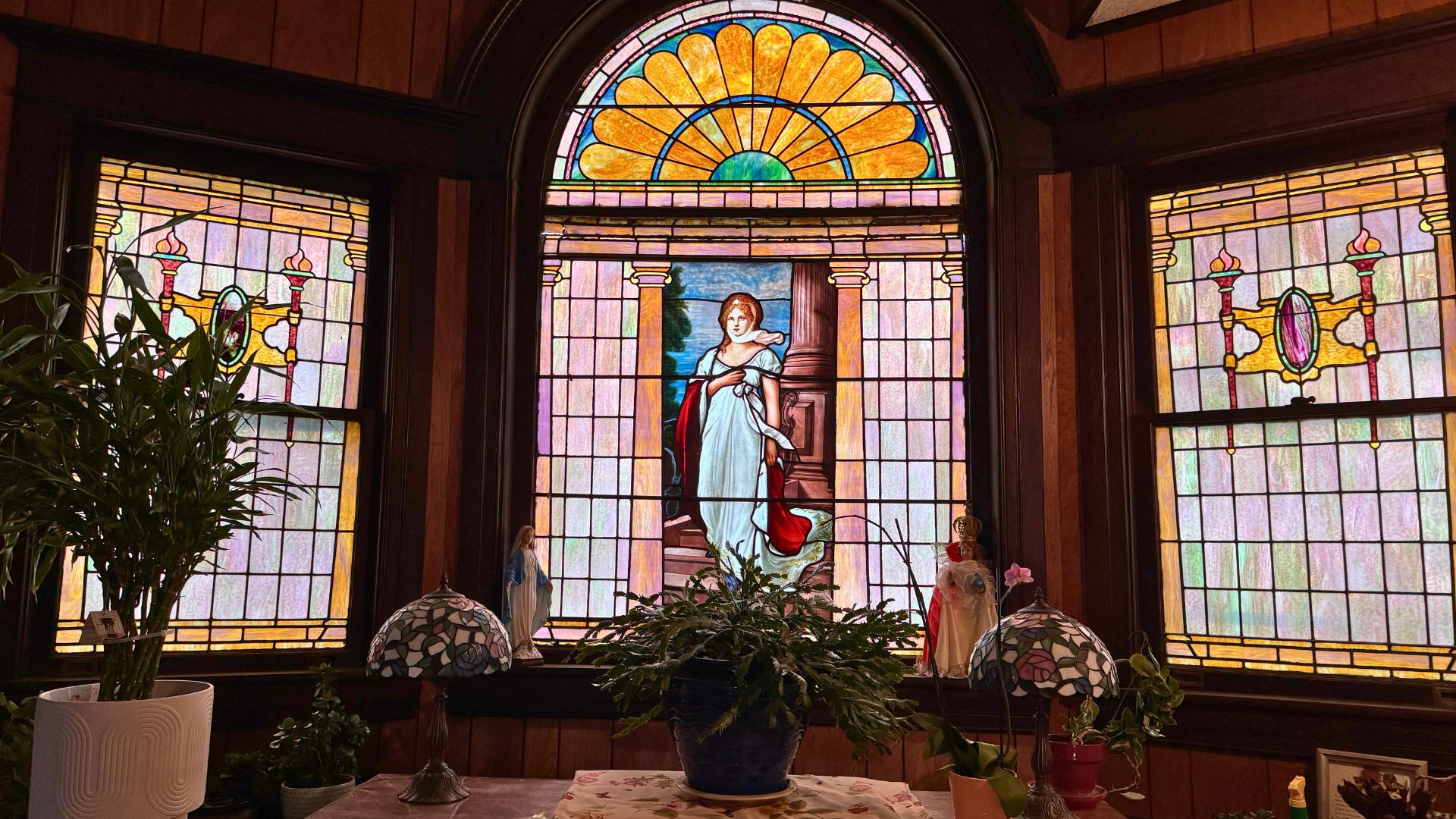
What we did not expect was a discovery that immediately stopped everyone in their tracks. Framed within the home’s grand front parlor sat a breathtaking full height stained glass portrait, glowing with soft pastel colors and shimmering opalescent light. This was sitting at the top of the steps and was big conversation piece.
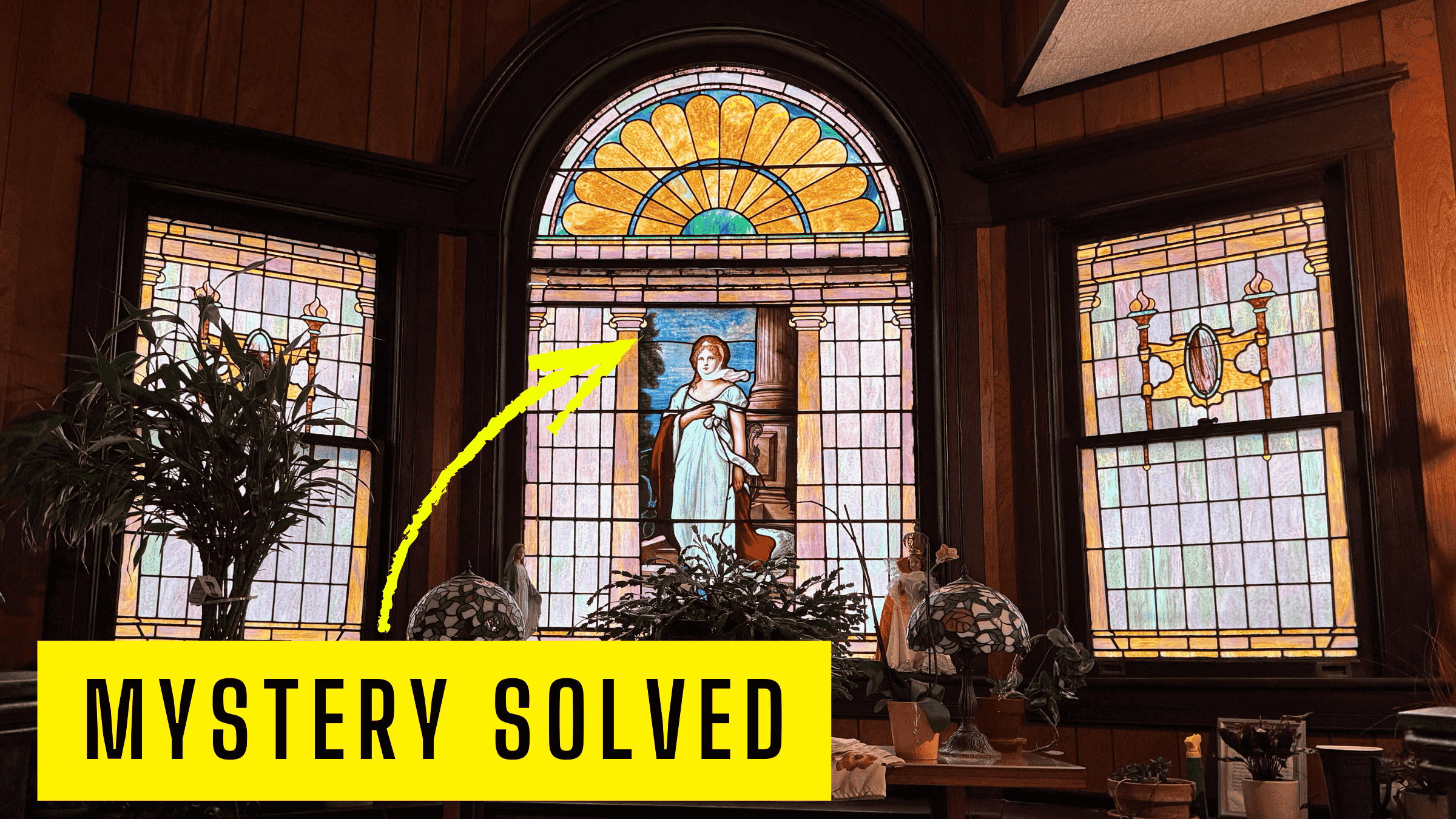
A Rare Stained Glass Discovered Inside a 127 Year Old Wildwood Crest Mansion
The thing was though, the owners didn’t have much information about the stained glass. Being that the house was built in 1898, its hard to say for certain who it was, who made it or what it meant. This put the Wildwood Video Archive team into a deep dive of stained glass manufacturing in Philadelphia.
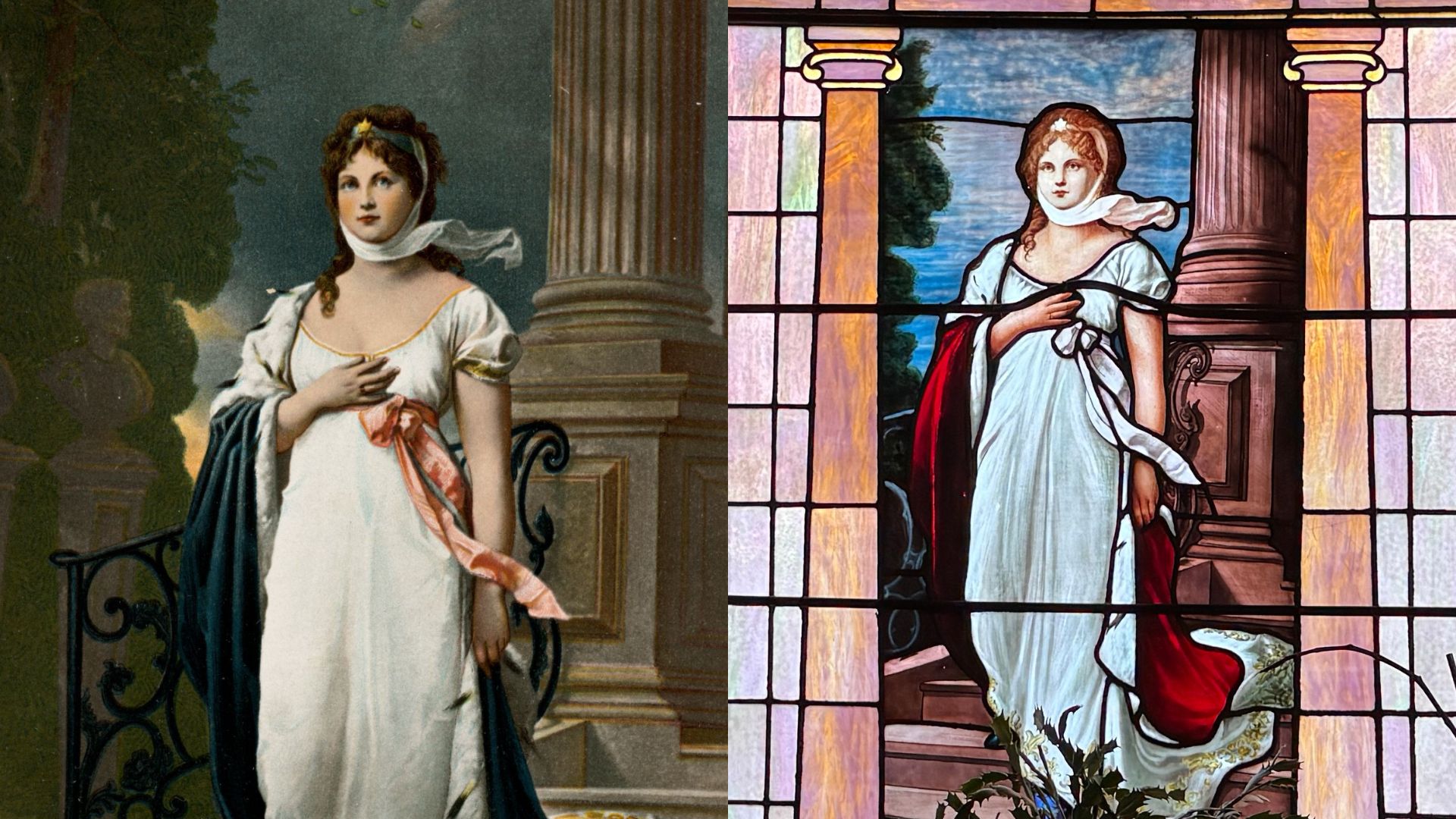
The figure depicted was not a saint, an allegory, or a typical Victorian decoration. It was Louise of Prussia, one of Europe’s most admired royal figures of the nineteenth century.
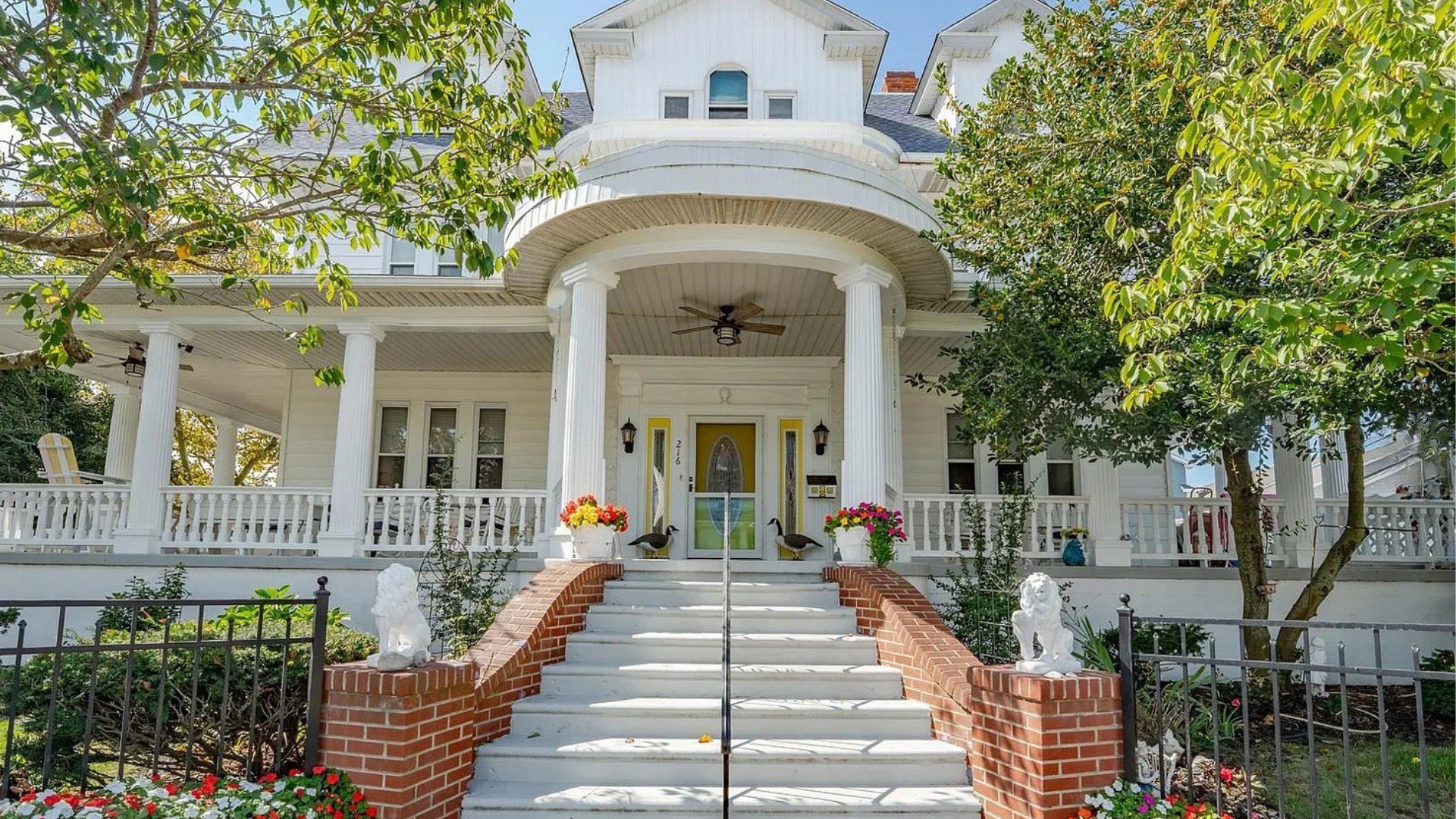
This extraordinary window appeared in the property featured in our recent video Inside the 127 Year Old Wildwood Crest Mansion Listed for 2.7 Million. You can watch that full video at the bottom of this article.
The discovery adds a remarkable and unexpected layer of history to a home that already stands as a piece of early Wildwood Crest heritage.
 Who Louise of Prussia Was and Why She Appears Here
Louise of Prussia, born in 1776, became Queen of Prussia and quickly rose to iconic status during her lifetime.
Her grace, intelligence, and reputation for moral strength made her a beloved figure across Europe.
By the late 1800s her image was reproduced widely in prints, paintings, and decorative arts. For homeowners wanting to project refinement and culture, a portrait of Louise was an ideal choice.
This stained glass of her is very similar to the 1879 painting of her by Richter, Gustav Karl Ludwig. It was original art piece that was reproduced into many different things over those decades.
Also See: New Philadelphia Cruise Terminal Opening in 2026 – First Look
Her presence in a Wildwood Crest home tells us that this was not merely a beach cottage.
This was a house built by someone who wished to convey sophistication and status. Installing a portrait of European royalty in stained glass during the late Victorian period would have been seen as an elegant architectural statement.
 A Window Far Beyond Ordinary Victorian Glass
Stained glass found in Jersey Shore homes from the late nineteenth century usually falls into two categories. Some feature simple geometric arrangements of colored panes, while others include mass produced decorative elements ordered from builder catalogs. The Louise of Prussia window belongs to neither group.
This is a true art glass portrait, a rarity in private residences along the coast.
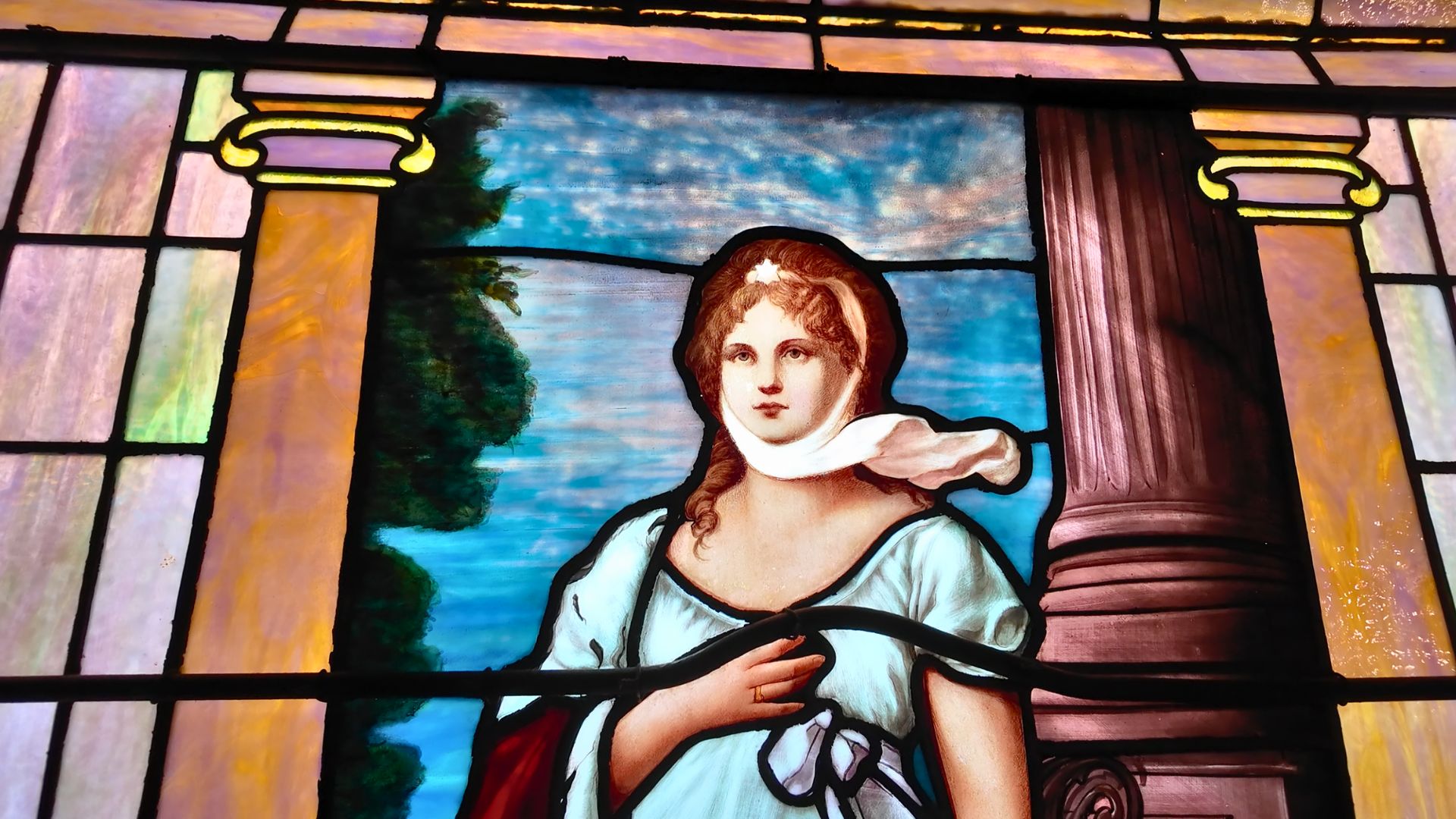
Several key details make this clear. The face of Louise is skillfully painted using enamel, with delicate shading around the eyes and mouth that required a trained artist and multiple kiln firings.
Her draped clothing is modeled with fine brushwork that captures folds and shadows, a level of care found only in custom work. The background sky is created with streaky opalescent glass, a material prized by American art glass studios during the Tiffany era.
The surrounding border and the two matching sidelights use opalescent pastel glass that shifts color depending on the light, a hallmark of late Victorian American design.
These elements reveal that the window was not purchased ready made. It was custom ordered for this house, likely at the time of its construction.
 What This Side Window Actually Represents
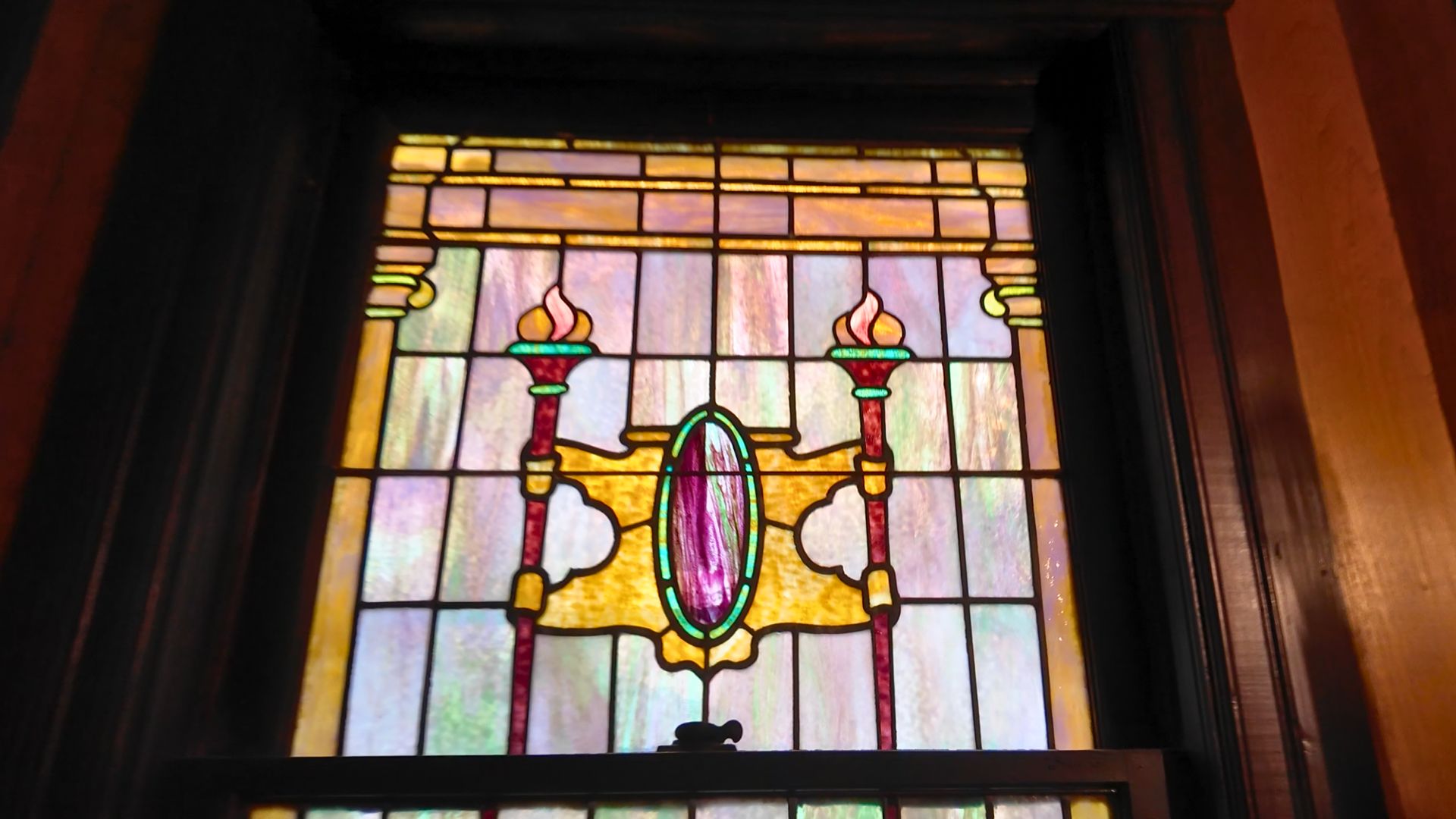
Along side both sides of the center glass are panels that feature a central glass jewel framed by a pair of torch motifs. In late Victorian stained glass design, this combination was extremely intentional. It typically symbolized: Light, learning, enlightenment, and refinement.
Torches flanking a central jewel were used in upscale residential stained glass to represent cultured, educated households.
Because the central portrait is Louise of Prussia, a figure associated with virtue and nobility, the side panels reinforce the idea that the owner wanted to present the home as sophisticated and morally upright.
This was not random decoration. It was thematic.
The elongated oval jewel is made of fired and rounded glass, sometimes called a cabochon. These were expensive elements in the 1890s because they were hand formed and polished.
The swirling pink-purple color inside the jewel indicates it’s made from two layers of streaky opalescent glass, not just a solid color. This matches the opalescent palette of the Louise portrait.
Meaning, who ever commissioned this not only had good taste but had a ton of money to spend.
Which makes since since this house was being built right on the beach in a shore town that technically didn’t exist yet.
Something to keep in mind, between 1893–1897, the united states economic downturn due to the Panic of 1893. Meaning that who ever built this house did have a lot of money to spend.
 Clues in the Artistry Point to Philadelphia
Wildwood in the 1890s was shaped largely by developers and homeowners from Philadelphia.
Most high end architectural elements found their way to the island through Philadelphia craftsmen, and stained glass was no exception. Several prominent Philadelphia studios of the era produced portrait windows that closely resemble the Louise panel.
Studios such as George W. Spence, Spence, Hacker and Company, and Jehlen and Murphy were known for creating finely painted opalescent portrait windows for upper class residences across South Jersey.
Their artists used the same techniques seen here: enamel shaded faces, classical architectural backdrops, soft opalescent color palettes, and jewel accented side panels. These studios also produced ensembles of three coordinated windows similar to the grouping found in the Crest mansion.
While the exact studio cannot be confirmed without archival records, every artistic clue points strongly toward a Philadelphia art glass workshop active between 1895 and 1905.
The work is too refined for catalog production and too regionally characteristic to have been imported from Europe.
 A Surviving Masterpiece in the Wildwoods
Perhaps the most remarkable part of this discovery is that the window remains exactly where it was installed more than a century ago.
Many stained glass pieces from the era were removed during renovations or lost over time. The Louise of Prussia window survived untouched, along with its matching sidelights, preserving both its artistry and its historic integrity.
It now stands as one of the most significant stained glass pieces known on the island, offering an extraordinary look into the tastes and aspirations of the families who first built Wildwood Crest.
More than just a decorative feature, it is a rare surviving example of American art glass craftsmanship and a vibrant connection to the earliest days of the resort.
Below is our full video tour of the mansion. Before you watch, please do consider sub subscribing!