
Why South Jersey Gas Delivery Charges Are So High: A Breakdown of a Real Bill
Many South Jersey residents have been shocked this winter after opening their South Jersey Gas bills and realizing that the delivery charges are higher than the cost of the gas itself. That includes us as well and so we wanted to see what was happening.
To understand why this, it helps to break down a real bill line by line and explain what customers are actually paying for.
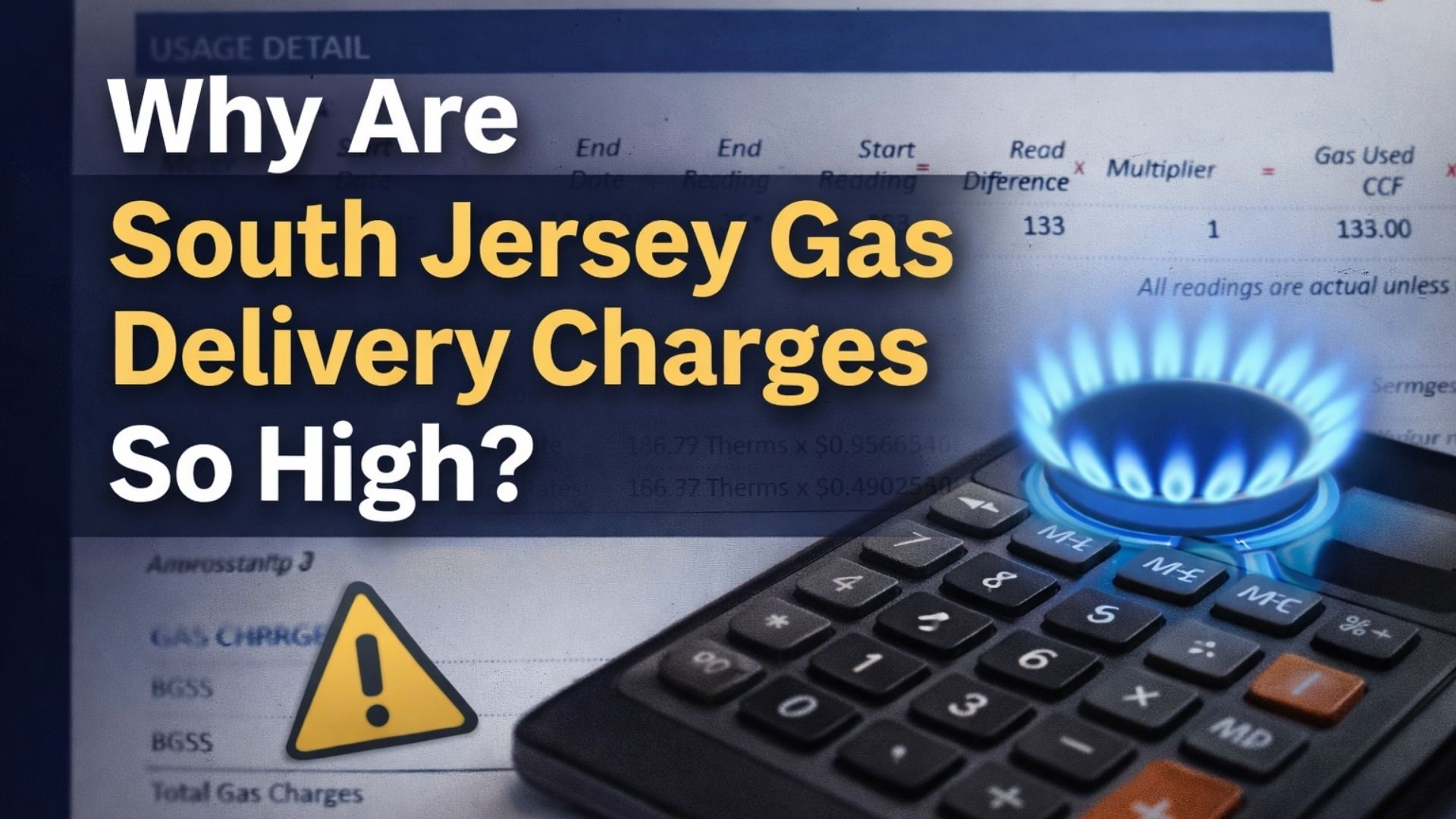
This example bill covers the period from November 14 to December 15. During that time, the customer used 133 CCF (Centum Cubic Feet) of natural gas, which converts to about 137.79 therms after applying the standard therm factor.
The total amount due on the bill is $259.11. What surprises most people is how little of that total is for the gas itself.
Why South Jersey Gas Delivery Charges Are So High
Gas Supply vs Delivery
The gas supply portion of the bill is listed as BGSS, which stands for Basic Gas Supply Service. This is the actual cost of the natural gas commodity. In this case, the gas supply total is $60.90.
That means only about 24 percent of the bill is for the gas itself.
The remaining balance comes from delivery and fixed charges.
 Customer Charge
The first delivery-related charge is the customer charge, which is a flat fee of $10.85. This fee is charged every month regardless of how much gas is used. It covers basic administrative costs such as billing, customer service, and maintaining an active account.
Also See: Larkin’s Enters New Chapter After 75 Years of Family Ownership in Wildwood
Delivery Charge Base Rate
The largest portion of the bill comes from the delivery charge base rate. On this bill, South Jersey Gas charged 137.79 therms at a rate of $0.956601 per therm. That adds up to $131.81.
This charge is meant to cover the cost of operating and maintaining the gas delivery system. This includes pipelines, safety inspections, leak detection, system upgrades, and overall reliability.
Even though customers may think of delivery as simply moving gas through pipes, this charge reflects the long term infrastructure costs of keeping that system running safely.
 Delivery Charge Rider Rates
On top of the base rate is another delivery fee called the rider rates. These riders added an additional $55.55 to this bill, calculated as 137.79 therms at $0.403150 per therm.
Rider charges are used to recover costs for state-mandated programs.
These often include energy efficiency programs, low-income assistance, and other regulatory requirements approved by the New Jersey Board of Public Utilities.
While these programs serve public policy goals, they are funded directly through customer bills.
 Putting It All Together
When you add everything up, the total usage and delivery costs come to $198.21. Adding the gas supply charge of $60.90 brings the final total to $259.11.
In simple terms, the customer paid about $1.36 per therm just for delivery, compared to roughly $0.44 per therm for the gas itself.
Many residents are frustrated about this, though because delivery charges increase automatically as usage increases.
During cold months, higher heating demand means higher delivery fees, even though the delivery system itself does not necessarily become more expensive to operate day to day.
Another factor is that South Jersey Gas delivery rates are higher than those of some other utilities (when compared to PSE&G and New Jersey Natural Gas), making the difference especially noticeable during winter billing cycles.
 The Bottom Line
South Jersey Gas delivery charges are high because they bundle infrastructure costs, regulatory programs, and fixed system expenses into a per therm charge that scales with usage.
While these rates are regulated and approved at the state level, the result for consumers is a bill where delivery costs far outweigh the actual cost of the gas.
Just don’t expect the delivery fees to go down anytime soon. As winter continues, many South Jersey residents can expect delivery charges to remain the largest part of their gas bills unless usage drops or rates are adjusted through future regulatory decisions.
For now, we can all just start wishing hard for some 55-degree weather.